Sunday, January 3, 2016
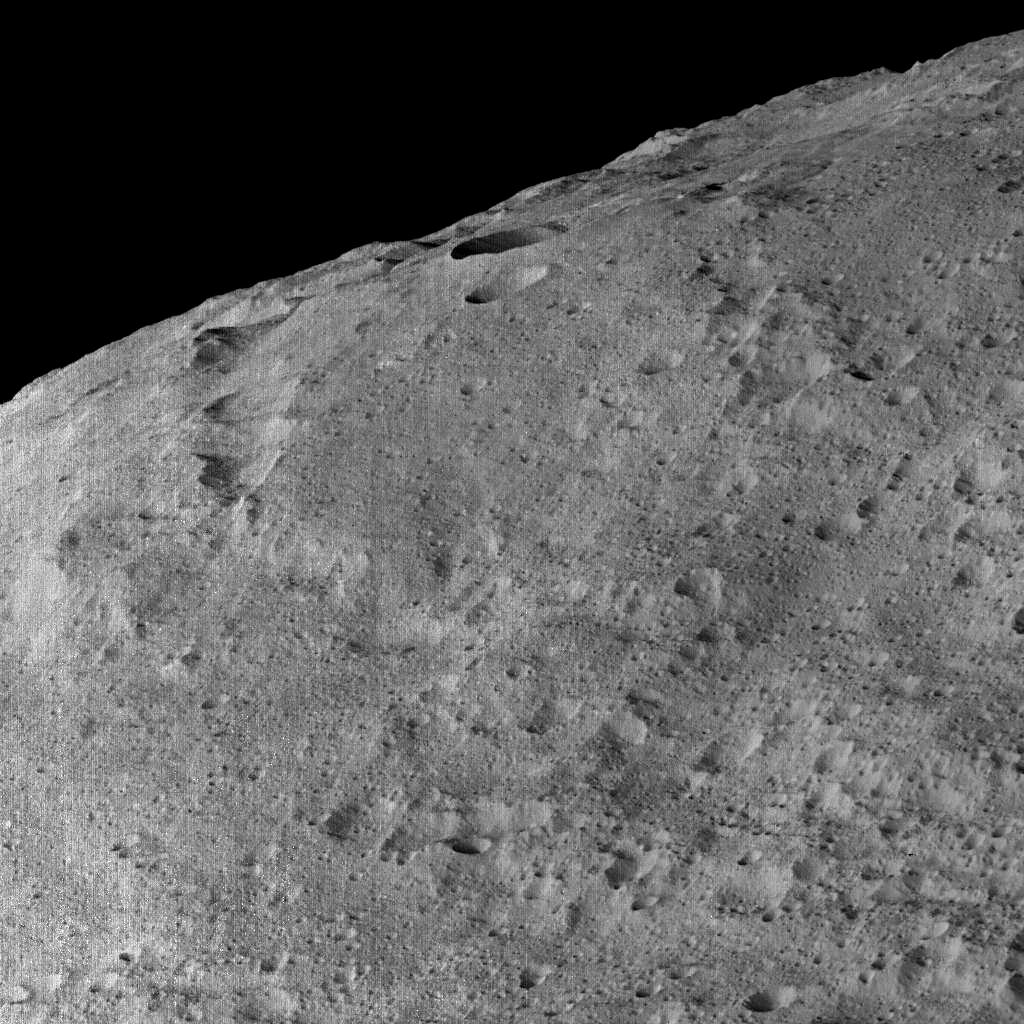
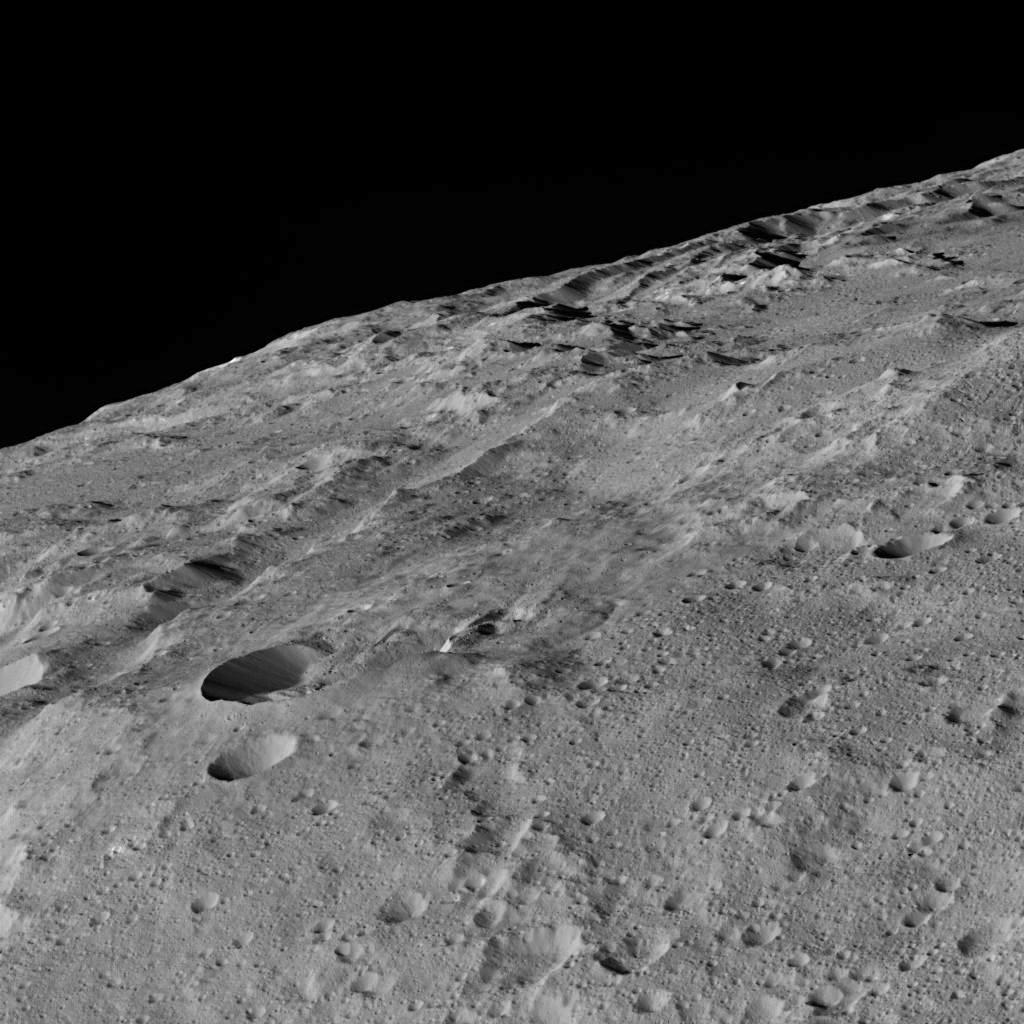
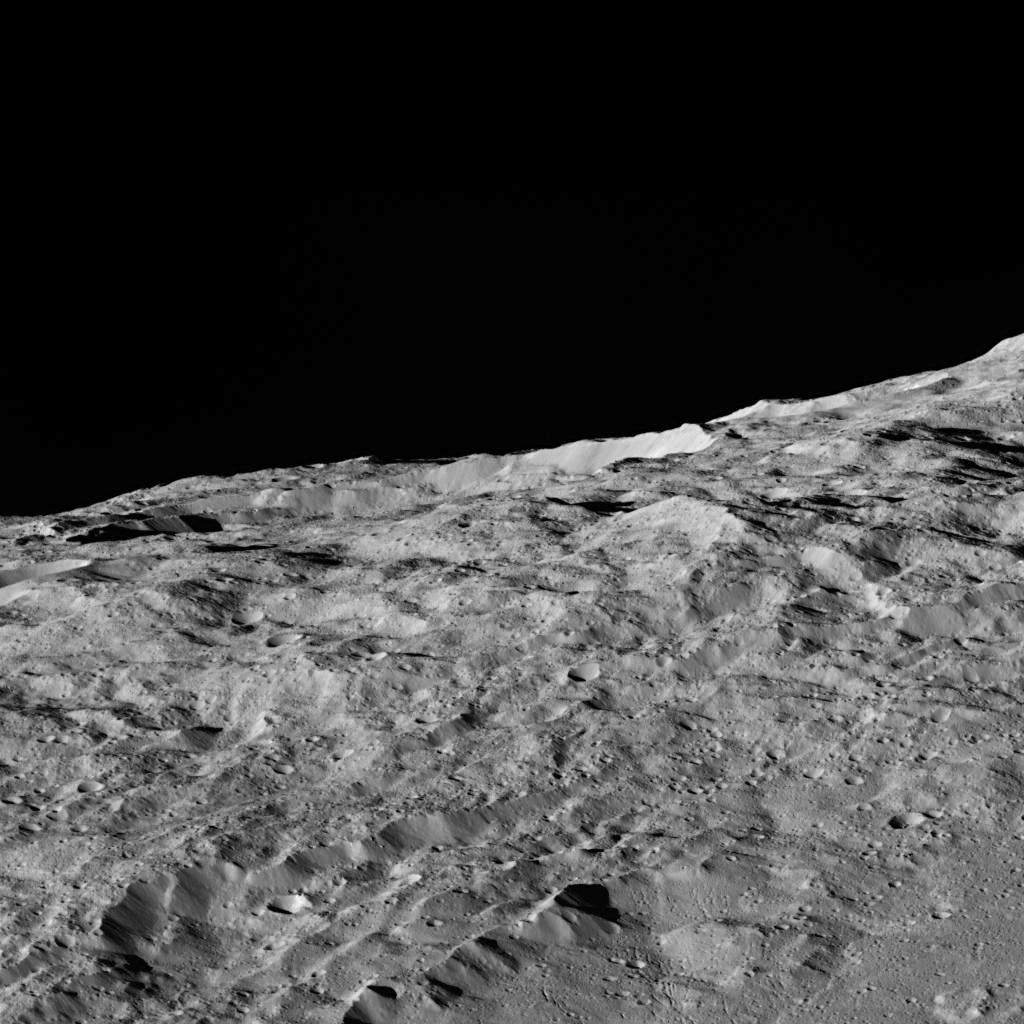
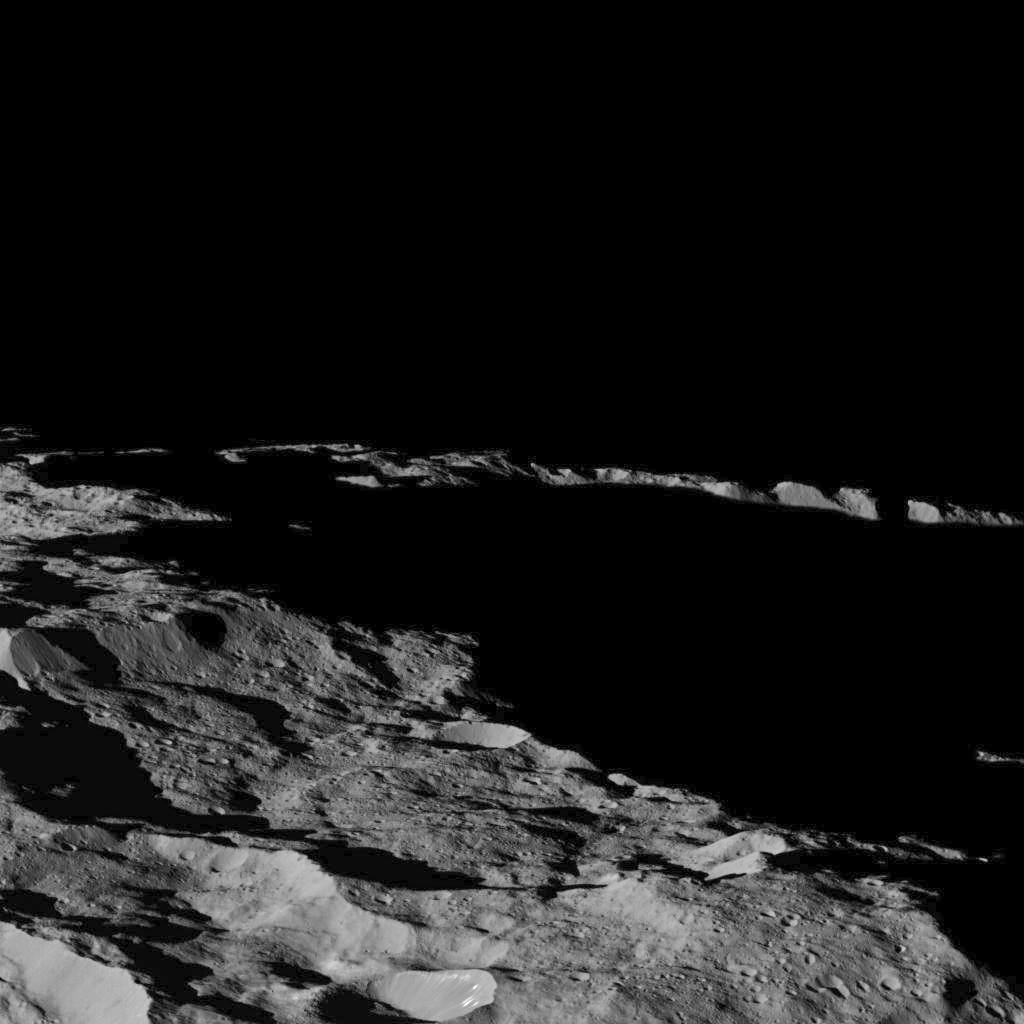
HAMO 40 - HAMO 49
I've updated the Dawn HAMO gallery again, with images 40-49.
Tuesday, December 29, 2015
Monday, December 28, 2015
Just a short update today (for now). I've downloaded all of the raw Hubble data targeting Pluto, from the FOC (Faint Object Camera) and ACS/HRC (Advanced Cameras for Surveys/High Resolution Channel). I am in the process of converting these images to more usable products and will create a gallery for these for anyone interested in the data.
For more raw Hubble data, I recommend this particular archive search engine. When looking for objects such as Pluto, be sure to spell it in ALL CAPS and change the 'Resolver' setting to 'Don't Resolve'
Saturday, December 26, 2015
Thursday, December 24, 2015
In the future I hope to mesh this blog and what I tweet on Twitter, but for now, feel free to follow me there as well @zldoyle.
Wednesday, December 23, 2015
Doesn't seem like any new public releases will come out until after the upcoming holiday. New Horizons won't be updating their public release data until January 8th. Hopefully Dawn will resume prior to that.
In the mean time, this gives me a chance to update the gallery more. I've added H60-H65.
Tuesday, December 22, 2015
![]() |
| HAMO 82 primarily features Hamori crater in the Zadeni quadrangle, near the Cerian South Pole. |
Low Altitude Mapping Orbit (LAMO) have also just been posted today.
I haven't updated this blog in over a year. Currently I have focused my efforts on planetary science and image processing. I will be slowly adding those products to several galleries that will turn up here in an organized manner eventually. The one I've just added features images processed from the Dawn mission, currently orbiting (1) Ceres, the largest object in the Asteroid Belt. Their team currently releases a single image every day. I've made it a goal to locate and place an outline of the regions these images cover and provide that product to the public in the hopes of spurring further interest in an incredible world that may only seem simple, bleak and grey to most.
The Pluto-Charon system has been of great interest to me as well and I've also released a multitude of products covering the New Horizons mission as well. However, lately my focus has been on developing my own algorithms to better process the data to bring further clarity of the images. Recently an image I released was featured on the front cover of the Planetary Report, for which I'm very proud and grateful to see my work can be enjoyed by so many. Look for these images to be uploaded soon as well.
In the future, I also plan to do some more reblogging of stories I've found interesting. This will hopefully become another feature with the ones I outlined previously. The previous features will also receive more attention in the future, but I must say, they will likely be more of a novelty bit rather than the proposed weekly addition.
The Pluto-Charon system has been of great interest to me as well and I've also released a multitude of products covering the New Horizons mission as well. However, lately my focus has been on developing my own algorithms to better process the data to bring further clarity of the images. Recently an image I released was featured on the front cover of the Planetary Report, for which I'm very proud and grateful to see my work can be enjoyed by so many. Look for these images to be uploaded soon as well.In the future, I also plan to do some more reblogging of stories I've found interesting. This will hopefully become another feature with the ones I outlined previously. The previous features will also receive more attention in the future, but I must say, they will likely be more of a novelty bit rather than the proposed weekly addition.
Monday, August 11, 2014
SloMoMonday 001 - Calcium Sulfate
This multiple sequence video features dyed and powderized calcium sulfate. This is much more commonly known as sidewalk chalk.
Wednesday, July 2, 2014
New outlook
I have several new series I plan to begin working on next week.
"WHAT WOULD HAPPEN..." will focus on mainly materials science experimentation. I will take you through most of the steps in setting up the experiment, and follow through with tests on the material.
"SLO MO MONDAY" will be a segment featuring scenarios, likely an unnoticed every day occurrence for many, featured in slow motion.
"LET'S TALK ABOUT:" will focus on materials and some lesser known devices: their properties, their uses, their reactions.
In the coming weeks I intend to make these regular postings. There will be other series coming in the near future as well with a focus on the broader physical sciences, optics, astronomy, and mechanical engineering.
Saturday, May 10, 2014
Places and people worth following
Inspiration never occurs in a vacuum. As a creative person, I take inspiration from an enormously wide range of places. At the broadest spectrum, my interests are in design. Design is an interesting word which covers essentially all qualities of creativity. Cursed or not, my interest in design is limitless. Most of my information intake is through Newsblur, an RSS aggregator. On newsblur, I currently follow news posts from nearly 300 sources on a regular basis. I certainly won't list them all but the sources I find most interesting are listed below.
Engineering / Fabrication
Ben KrasnowBill Hammock
CNCZone
Hackaday
Instrucatables
Mattias Wandel: Woodgears
Mikeselectricstuff
SparkFun: Learn
Todd Fun
Tom Griffen
Science
Grant ThompsonNurdRage
PeriodicVideos
Smarter Every Day
Graphic Design / Print Production
BehanceColor Scheme Designer
Dafont
Font Squirrel
Soul Travel
TurnPixel
TutorArt
Tuts+
Visual.ly
We and the Color
Interior Design / Decor
Apartment TherapyDesign to Inspire
IHeart Organizing
Wednesday, April 23, 2014
Overdue Update
It has been a long time since my last update. I have numerous projects to post about in the future. As for now, I wanted to post a link to my research source page on Wikipedia (link). I haven't pursued space technology research for many years now but the links are quite valuable to all realms of science and technology research. I can tell by the page view statistics that many other users find it quite useful as well.
My future intentions with this blog is to have at least one post per week. I have about 30 projects at this time so I have a lot of content to post.
Friday, January 13, 2012
Entry #4: A method for blocking the light of a star for long-term exposures of a particular system
Capturing images of exoplanets has been a long, sought after goal for astronomers. Until very recently, when Rolf Olsen was able to capture a planet forming disc around a Beta Pictoris, the possibility of amateur astronomers being able to block out enough light from a star to capture any orbiting material had been extremely slight. He followed a method described in a paper titled, "Observation of the Central Part of the Beta-Pictoris Disk with an Anti-Blooming CCD" as he notes,
"I followed the technique described in the paper above, which basically consists of imaging Beta and then taking another image of a similar reference star under the same conditions. The two images are subtracted from each other to eliminate the stellar glare, and the dust disc should then hopefully reveal itself."
This method, while producing an incredible result, has numerous flaws, including multiple unknown conditions that could produce a false result. As such, a method that is both relatively inexpensive, and accessible, is a necessity in going forward, with the ever-expanding archive of discovered exoplanets.
Two readily available technologies exist that include precision control and are able to pass incoming light. These two considerations are obviously absolutely necessary for such a system but each method has considerable drawbacks that must be considered carefully.
Method 1 - DLP: DLP chips operate by actuating microscopic mirrors to direct of deflect light. A high resolution chip may be used in place of a right-angle mirror piece. Once attached to a computer, a simple image application may be used to control the device.
+ : very high contrast, obvious placement in optical assembly, does not diminish the final picture
- : requires an expensive high resolution chip, possibly limited angular resolution
Method 2 - LCD: LCD panels pass light through opposing polarizing filters by twisting the light path through a liquid crystal cell. If the cell remains untwisted, the polarizing filters will block most of the light from passing. Using a high resolution panel in front of the primary objective would allow precise control over the light which is blocked.
+ : potentially cheaper option
- : likely to be heavier/more invasive, lower contrast potential, screen door effect is likely to diminish visual quality and produce numerous artifacts
Subscribe to:
Posts (Atom)